2025 CNC Lathe Buying Guide:
Precisely Match Needs and Avoid Purchase Risks
Faced with a wide variety of lathes on the market, do you feel overwhelmed and unsure where to start? Are you worried about choosing the wrong spindle bore diameter, chuck size, or guide rail type, resulting in idle or underperforming equipment? Are you concerned about long-term losses due to investment mistakes, lack of after-sales service, or substandard equipment precision?
Whether you are a small processing plant, a growing manufacturer, or upgrading your equipment, this CNC lathe buying guide will help you quickly make a decision, from needs analysis and specification comparison to pitfalls-avoidance guidance and after-sales evaluation. We provide you with one-stop decision support.
Understanding Lathe Types and Their Applications
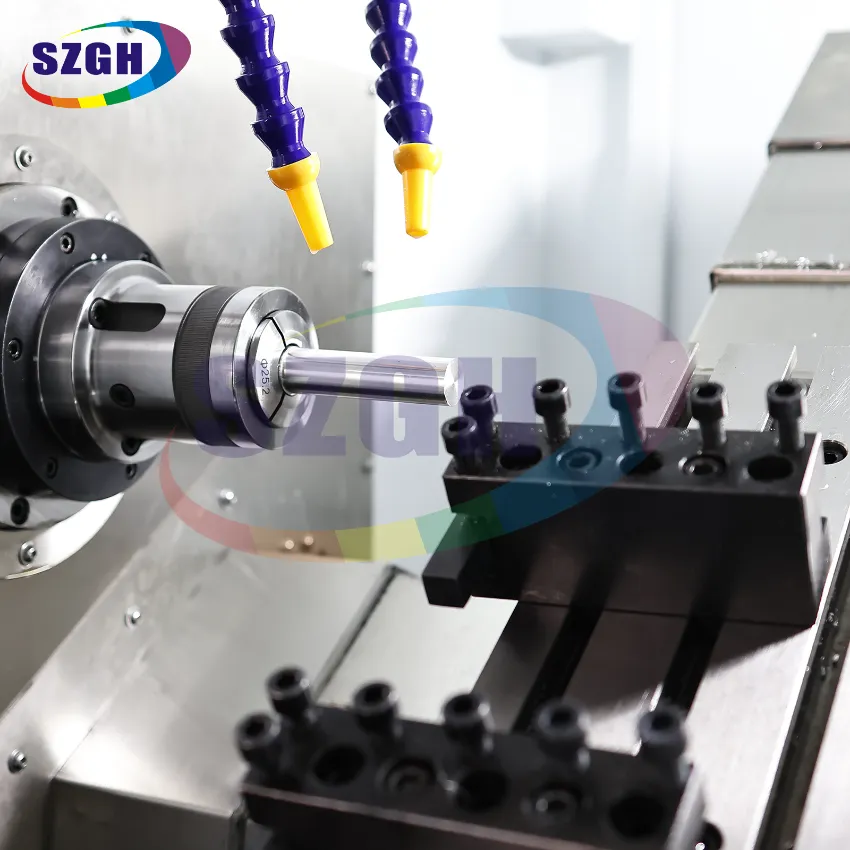
If you're new to machining and see all the different models of CNC lathes, you might feel a little confused: “What's the difference between these machine tools?” “Which one is right for me?” Which types of lathes are suitable for which parts, which factories, and which scenarios?
| Type | Main Features | Typical Processing | Preferred Scenarios |
|---|---|---|---|
| Horizontal CNC Lathe | Highly versatile and cost-effective | Shafts, discs, general rotating parts | Multi-variety, small-batch production; as the first CNC machine |
| Mill-turn Machining Center | Process concentration, high precision | Complex parts with side holes, curved surfaces, irregular shapes | Complex/precision parts; avoid repeated clamping and improve yield |
| Vertical CNC Lathe | Large load-bearing capacity and high rigidity | Large/heavy disc, ring, shell-type parts | Machining heavy workpieces to ensure precision of large end faces and inner holes |
How to Choose a Lathe That Suits Your Needs
Your CNC lathe should meet your specific production needs. Please consider the following key factors:
- Material type: Are you mainly processing aluminum, or harder materials such as steel/stainless steel?
- Part size: What is the size (and approximate weight) of the largest part you will be machining?
- Production type: Is your business high-volume mass production or small-batch / varied production?
- Accuracy requirements: What are the tolerance/precision demands from your customers?
If you are still unsure which type suits you, feel free to share the materials you typically process, the complexity of parts (whether milling or multi-process is needed), and approximate size/weight — we can give you more tailored advice.
The Truly Important Key Specifications
Purchasing a CNC lathe is more than just selecting a machine; it's a strategic investment. The core lies in matching the machine’s capabilities precisely with your machining needs.
- Precision & Stability: The foundation of quality — positioning accuracy, repeatability, rigid bed/guide system ensure consistent output especially for mass production.
- Spindle & Drive System: The power core — spindle speed vs torque balance matters depending on material and machining type (e.g. aluminum vs steel).
- CNC System & Automation Potential: The intelligent brain — stability, ease of use, openness, interface support (Ethernet, I/O, automation) determine future expandability.
- Manufacturer Reliability & Lifecycle Cost: Hidden key — after-sales support, spare parts availability, maintenance, energy & upkeep costs over years, not just initial purchase price.
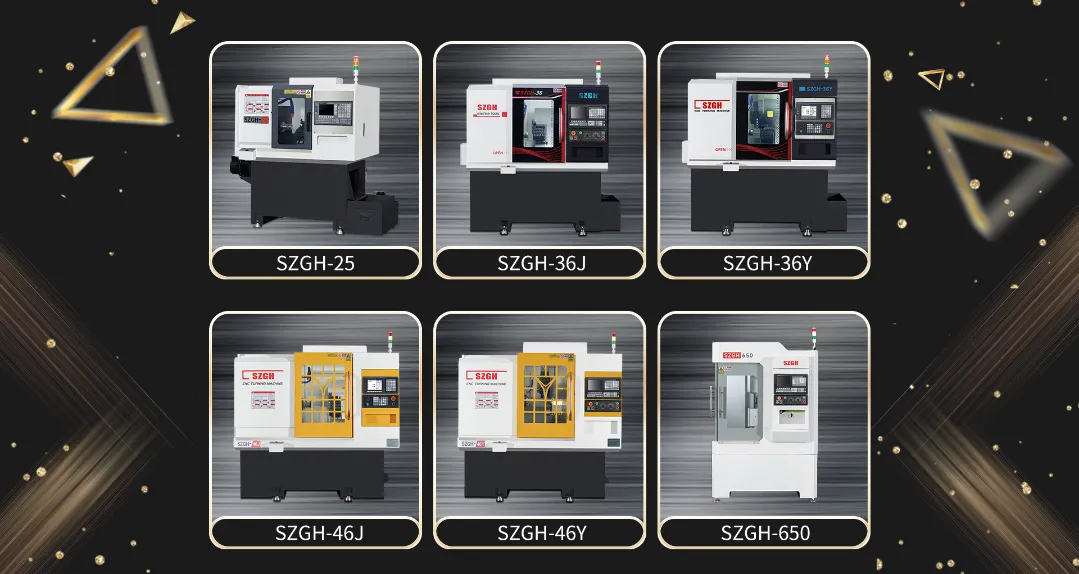
SZGH Product Series Comparison
When choosing a CNC lathe, matching your real needs with machine capabilities is crucial. Below is a comparison of core product lines to help you quickly select the right "partner."
| Product Model | Core Positioning & Advantages | Core Technical Features | Typical Applications | Investment Return Traits |
|---|---|---|---|---|
| SZGH-36J | Entry-level, cost-effective reliable choice | Compact structure, good rigidity; standard CNC system; accuracy ±0.01 mm | Small-batch general-purpose parts like shafts, discs | Quick ROI, reasonable initial investment, rapid profit generation |
| SZGH-46J | Heavy-duty, all-round main force | High-power spindle with high torque; reinforced bed & guideways; optional automation interface | Continuous heavy-duty processing of steel / stainless steel; bulk orders; transition to automation | Balanced performance-cost; high capacity and long term value |
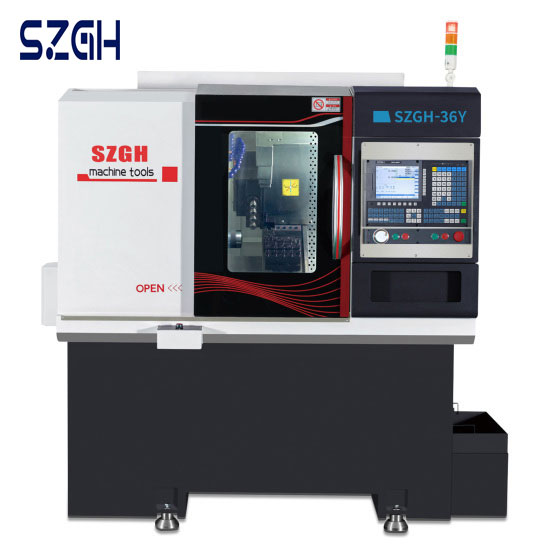
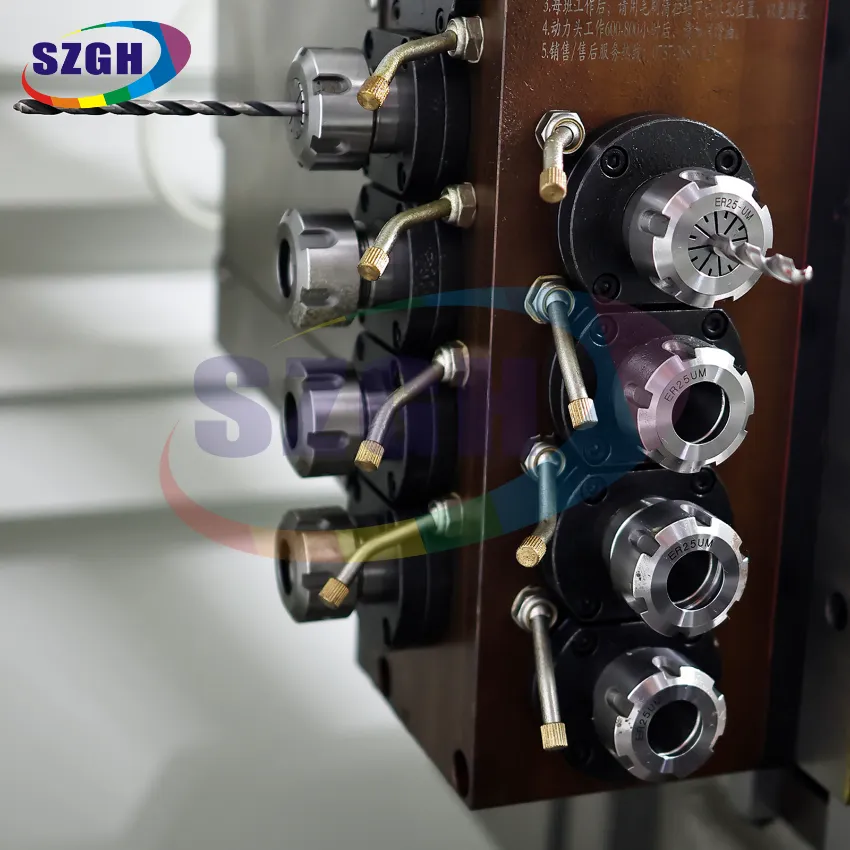
| Turning-Milling Composite Series(SZGH-36Y/SZGH-46Y) | One-stop solution for complex parts | Powered cutter head + Y-axis; multi-axis linkage; high-precision composite machining | Precision & complex components; small-batch complex parts processing | Higher initial cost but efficiency, precision, yield improved — suitable for high-end orders |
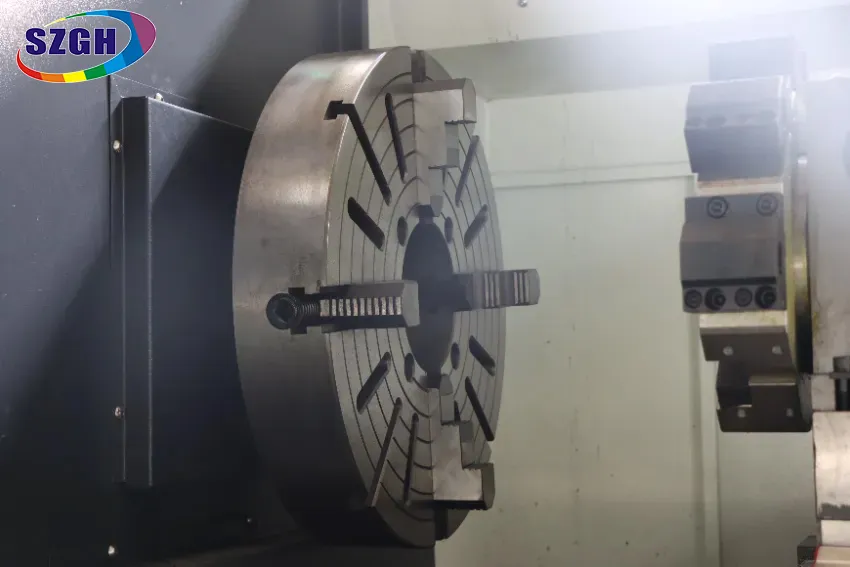
| SZGH Customized Heavy Duty Series | Dedicated heavy-duty machining platform for oversized components | Customized bed/spindle; extra-large through-hole; very high load-bearing capacity | Large-diameter flanges, rotors; energy equipment, heavy machinery, molds | Specialized investment to meet special processing needs; enabling unique manufacturing capabilities |
Five Common Misconceptions When Buying CNC Lathes
Myth 1: Focusing Only on Price and Chasing the "Lowest Price"
Assuming that all machine tools with similar functions are basically the same and that the cheapest one is the most cost-effective — this is dangerous.
Risk: Low price often implies compromise on core components (spindle, guideways, CNC control), leading to shorter lifespan, higher breakdown rates, poor stability. High maintenance costs, frequent downtime, scrap loss — total cost over time will far exceed that of a reliable machine.
Correct Approach: Perform a full lifecycle cost analysis — including purchase cost, maintenance, spare parts, energy consumption and downtime losses over several years.
Myth 2: Blindly Chasing "High Configuration" / Over-specification
High spindle speed, many axes, high-end specs ≠ always better for your needs. If you're only machining simple shaft parts, over-specification leads to wasted investment.
Correct Approach: Analyze your actual part complexity, materials, precision needs. Choose a machine that matches or slightly exceeds your needs. Prioritize rigidity and repeatability rather than unnecessary specs.
Myth 3: Ignoring After-sales Support and Technical Ecosystem
Purchasing the machine itself is only part of the story — if breakdowns happen, slow response, scarce spare parts or lack of training may cause production shutdowns or misuse.
Correct Approach: Evaluate supplier's after-sales network, spare parts availability, maintenance response time, and training/support services. Good support ensures long-term stable operation.
Myth 4: Only Considering Current Needs, Ignoring Future Growth
Choosing equipment that just meets today's demands without leaving room for future complexity or volume increases may result in early obsolescence and repeat investment.
Correct Approach: Plan ahead. Within your budget, consider machines with upgrade potential, automation interface readiness, and some margin in processing range to support future growth.
Myth 5: Overlooking Workshop and Installation Compatibility
Simply assuming that if there's space, the machine will fit is risky. Ground strength, power supply (voltage, load), ceiling/door height, handling & transport, foundation load bearing — all matter.
Correct Practice: Request detailed equipment foundation drawing and power requirement specs from supplier. On-site verify workshop floor load capacity, space, power supply, logistics before purchase.
Final Advice: Let Specifications Serve Your Production
The best specifications are those that just meet and moderately exceed your current and foreseeable future needs. Before final decision:
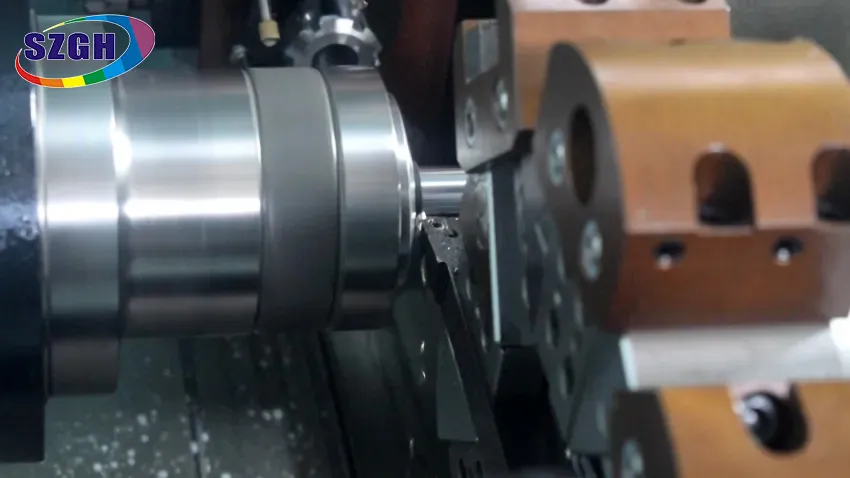
- Insist on on-site trial machining: bring representative blanks and drawings to test actual machining effect and precision report.
- Detail after-sales service terms in contract: warranty, response time, spare parts pricing, training, support, etc.