Six advantages and four core components of CNC machine tools
Six advantages and four core components of CNC machine tools
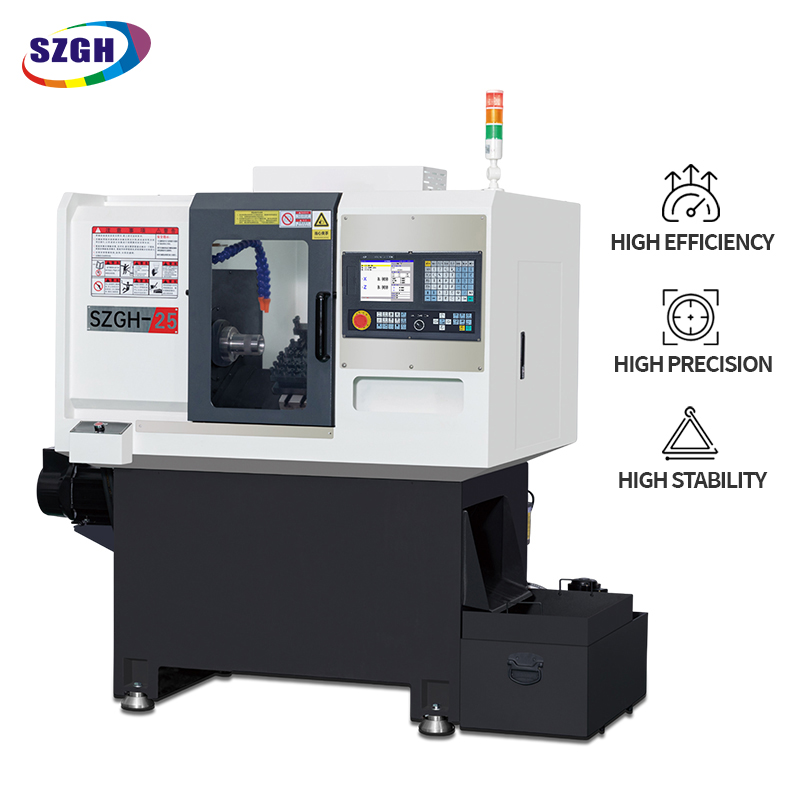
CNC machine tools, as the leader of modern manufacturing industry, have won the favor of engineers and manufacturers with their high precision, high efficiency and high automation. The following are the six significant features of CNC machine tools:
High-precision processing: CNC machine tools have extremely high processing accuracy, which can ensure that the size and shape accuracy of parts reach the micron level, greatly improving the quality of products.
Multi-axis linkage: CNC machine tools can perform multi-coordinate linkage, can process parts with complex shapes, and meet various complex processing needs.
Quick tool change: When different parts need to be processed, only the CNC program needs to be changed, without complex mechanical adjustments, which greatly saves production preparation time.
High productivity: The high precision and high rigidity design of CNC machine tools enable them to choose higher processing dosages, and the production efficiency is usually 3 to 5 times that of ordinary machine tools.
High automation: The high degree of automation of CNC machine tools can greatly reduce the labor intensity of workers and improve production efficiency.
High technical requirements: Although the operation and maintenance of CNC machine tools require certain professional skills, this also means that it can provide higher production efficiency and better product quality.
CNC machine tools are mainly composed of the following core components:
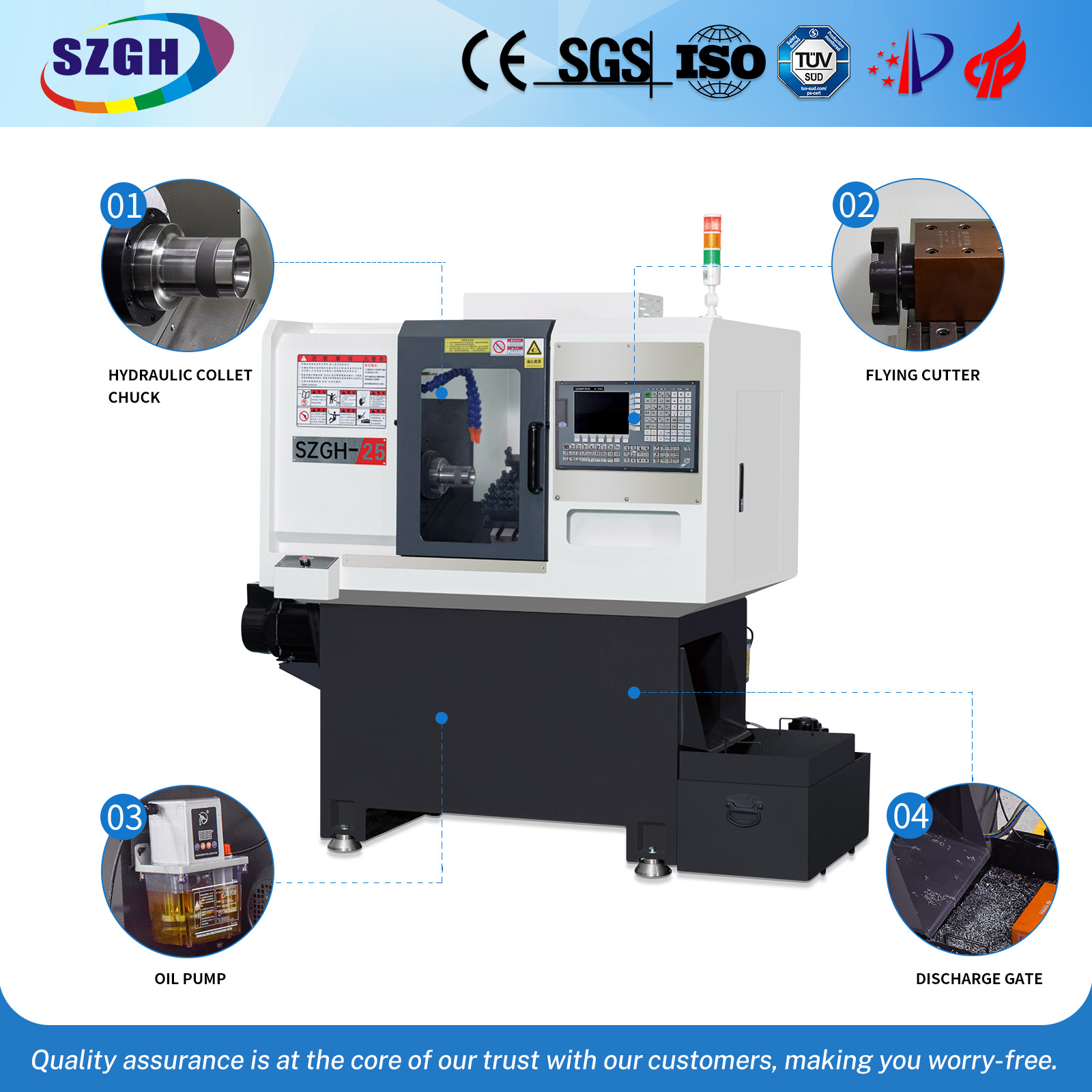
Main machine: This is the main part of the CNC machine tool, including mechanical parts such as the machine body, column, spindle, feed mechanism, etc., responsible for completing various cutting processes.
CNC device: This is the brain of the CNC machine tool, including hardware (such as printed circuit boards, CRT displays, key boxes, paper tape readers, etc.) and corresponding software, responsible for inputting and storing digital part programs, and completing various control functions.
Drive device: The drive device is the actuator of the CNC machine tool, including the spindle drive unit, feed unit, spindle motor and feed motor, etc., and the spindle and feed drive are realized through electrical or electro-hydraulic servo systems.
Auxiliary devices: These auxiliary components such as hydraulic and pneumatic devices, chip removal devices, exchange workbenches, etc., ensure the normal operation of CNC machine tools.
Programming and other auxiliary equipment: These devices are used to program and store parts outside the machine, making it easier for operators to program and debug.
Every component of a CNC machine tool is carefully designed to ensure that it can perform well in a variety of complex processing tasks. Whether it is automobile manufacturing, aerospace or mold processing, CNC machine tools are an indispensable part of modern manufacturing.