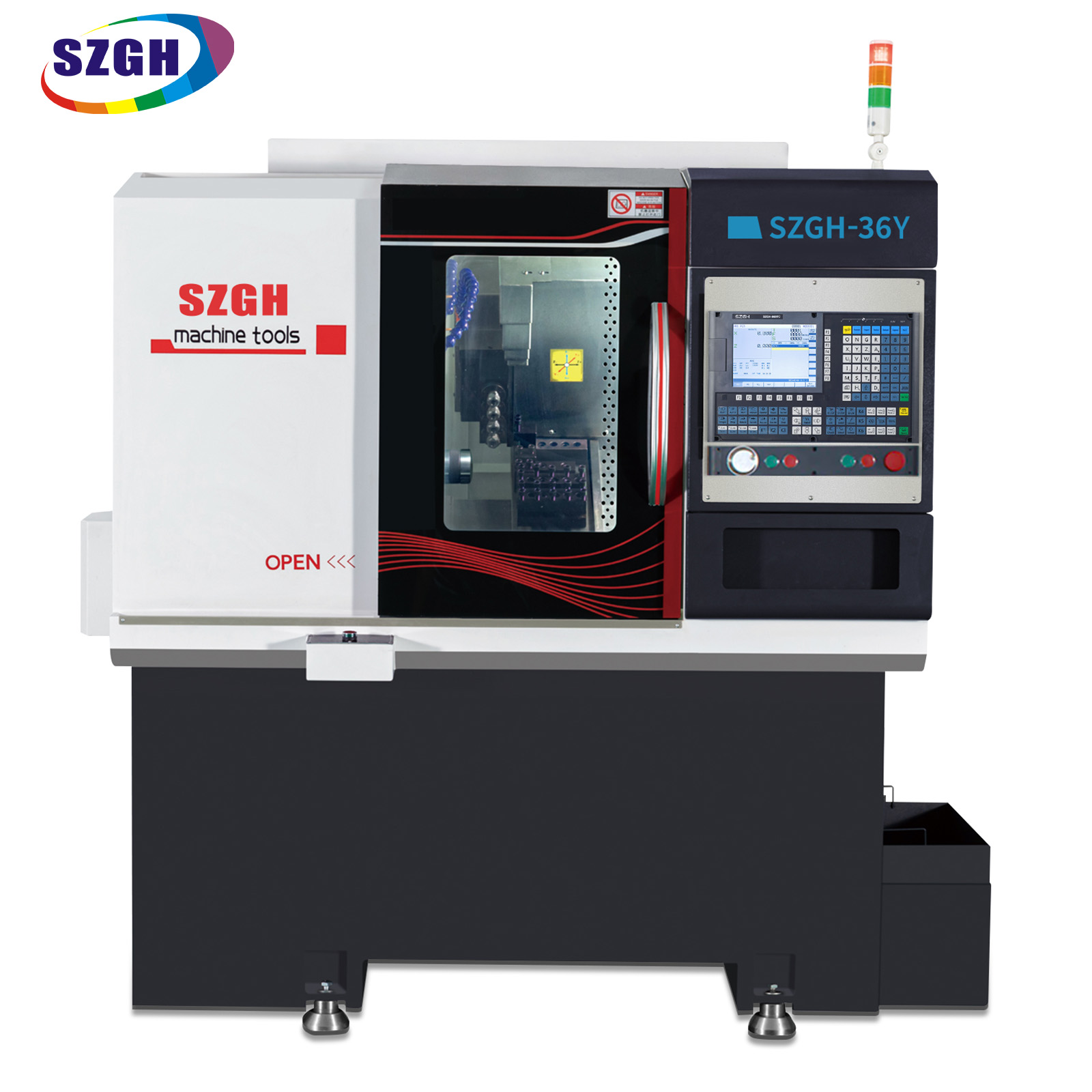
Turning and milling machine tools have made remarkable progress
1. Multi-axis linkage and high-precision integration
Multi-axis control technology: Five-axis linkage or even seven-axis and nine-axis composite processing has become the mainstream. Through synchronous control of the turning spindle, milling spindle and rotary table, complex curved surfaces (such as impellers and aviation structural parts) can be clamped and formed in one step.
2. Breakthroughs in material and tool technology
Handling difficult-to-process materials: The processing efficiency of materials such as titanium alloys and high-temperature alloys has been improved, thanks to the popularity of high-frequency spindles (above 30,000 rpm) and PCBN/PCD tools.
Compound tool design: Special turning and milling composite tools (such as drilling and milling cutters with cooling channels) reduce tool change time and improve processing consistency