For many manufacturers, choosing between a CNC Lathe and Turning-Milling is not a purely technical decision—it is a production strategy that directly impacts cost control, efficiency, and long-term scalability.
On paper, both machines can process cylindrical parts. In real production environments, however, the gap between “can machine” and “can produce efficiently” becomes very clear.
This article explains the real production differences between a CNC Lathe and a Turning-Milling Compound Machine, helping manufacturers choose the solution that genuinely fits their workflow—not just their specification sheet.
When a CNC Lathe Is the Right Choice
A traditional CNC Lathe remains one of the most widely used machine tools in manufacturing—and for good reason.
If your production mainly involves:
- Simple rotational parts
- High-volume, single-process turning
- Tight budgets with short ROI cycles
A CNC Lathe can still be the most economical and efficient solution.
Typical CNC Lathe Advantages
- Lower initial investment
- Simple operation and fast operator training
- High efficiency for pure turning tasks
- Easier maintenance and lower running cost
For workshops producing shafts, bushings, and standard round components, CNC lathes continue to deliver strong productivity and predictable output.
However, limitations start to appear once part complexity increases.
The Hidden Cost of Multiple Setups
Most production inefficiencies do not come from turning itself—but from everything that follows.
Manufacturers often encounter:
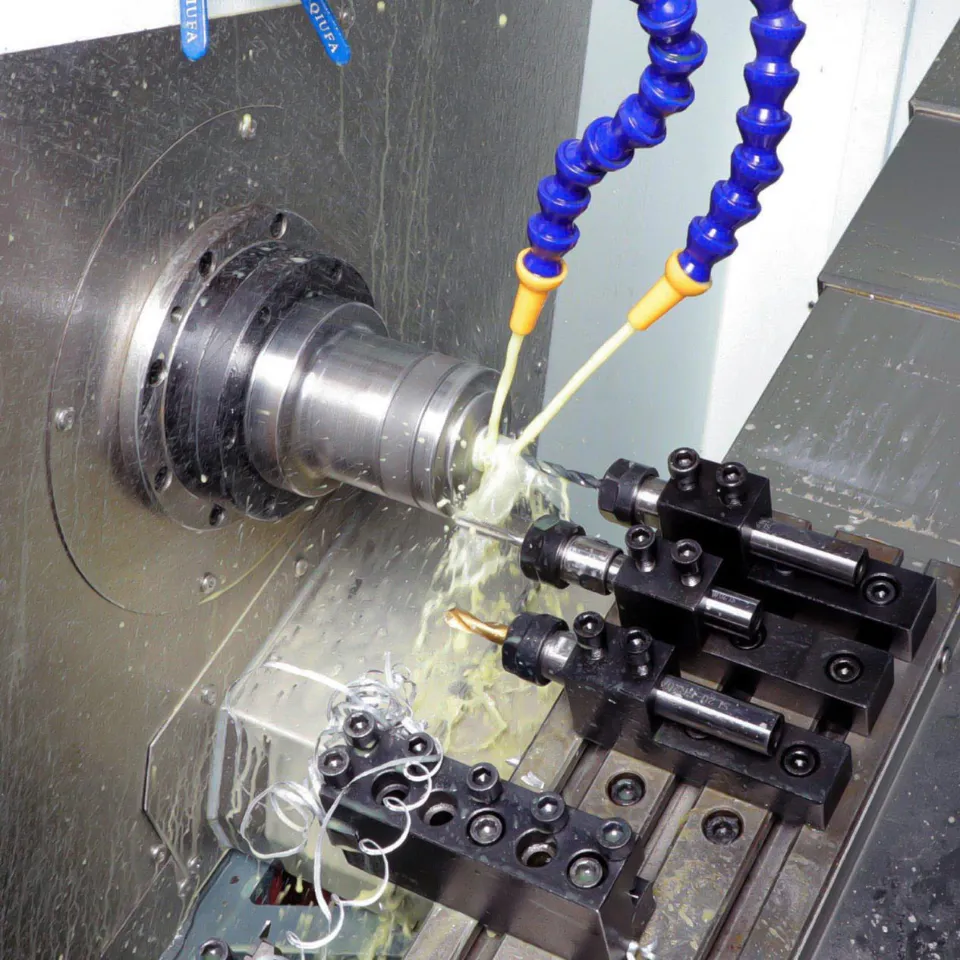
- Multiple clamping and repositioning steps
- Secondary milling or drilling on another machine
- Accumulated positioning errors
- Increased labor handling and coordination
What appears to be a simple CNC Lathe workflow can quietly turn into a multi-machine process, especially when parts require:
- Cross holes
- Keyways or slots
- Tapping operations
- Multi-face machining
This is where production cost and delivery risk begin to rise.
What Turning-Milling Changes in Real Production
A Turning-Milling Compound Machine integrates turning and milling operations into a single platform, allowing multiple processes to be completed in one setup.
From a production perspective, Turning-Milling is not about advanced technology—it is about reducing unnecessary steps.
Practical Benefits in Daily Production
- One-time clamping instead of two or three
- Fewer fixtures and less manual handling
- Reduced cumulative tolerance errors
- Shorter overall cycle time
- More consistent batch quality
For manufacturers producing medium-complexity parts, a Turning-Milling Compound Machine often brings stability that traditional CNC Lathe workflows struggle to maintain.
Is Turning-Milling Always the Better Option?
Not always.
A Turning-Milling Compound Machine for Production makes the most sense when:
- Parts require both turning and milling features
- Production batches change frequently
- Labor cost and setup time are significant concerns
- Automation and scalability are part of future planning
If your workflow remains focused on pure turning with minimal secondary operations, a CNC Lathe may still be the better-fit solution.
The key is not buying “more capability,” but buying the right capability.
A Real Production Scenario Buyers Recognize
Many manufacturers do not replace CNC lathes—they add Turning-Milling capability to remove bottlenecks.
Typical examples include:
- Shafts requiring side drilling
- Flanges with off-center features
- Components that previously moved between a CNC Lathe and a machining center
In these situations, a Turning-Milling Compound Machine acts as a process optimizer, not just another piece of equipment.
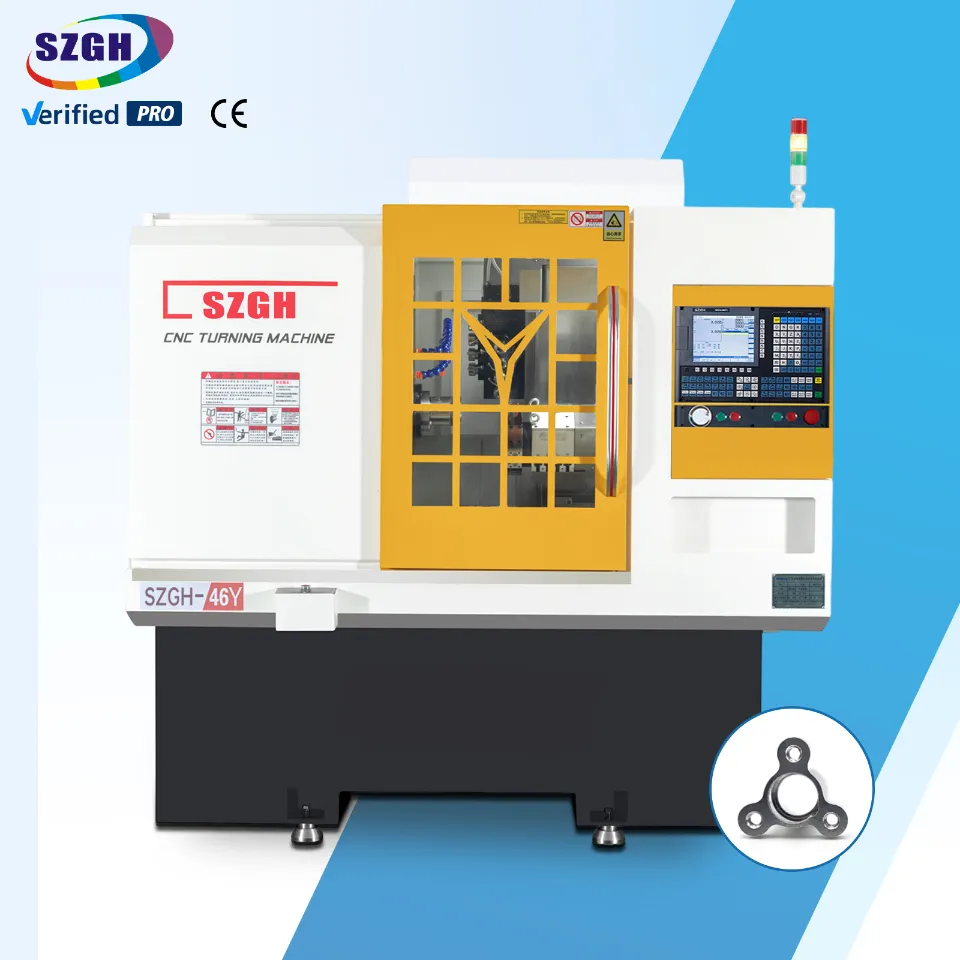
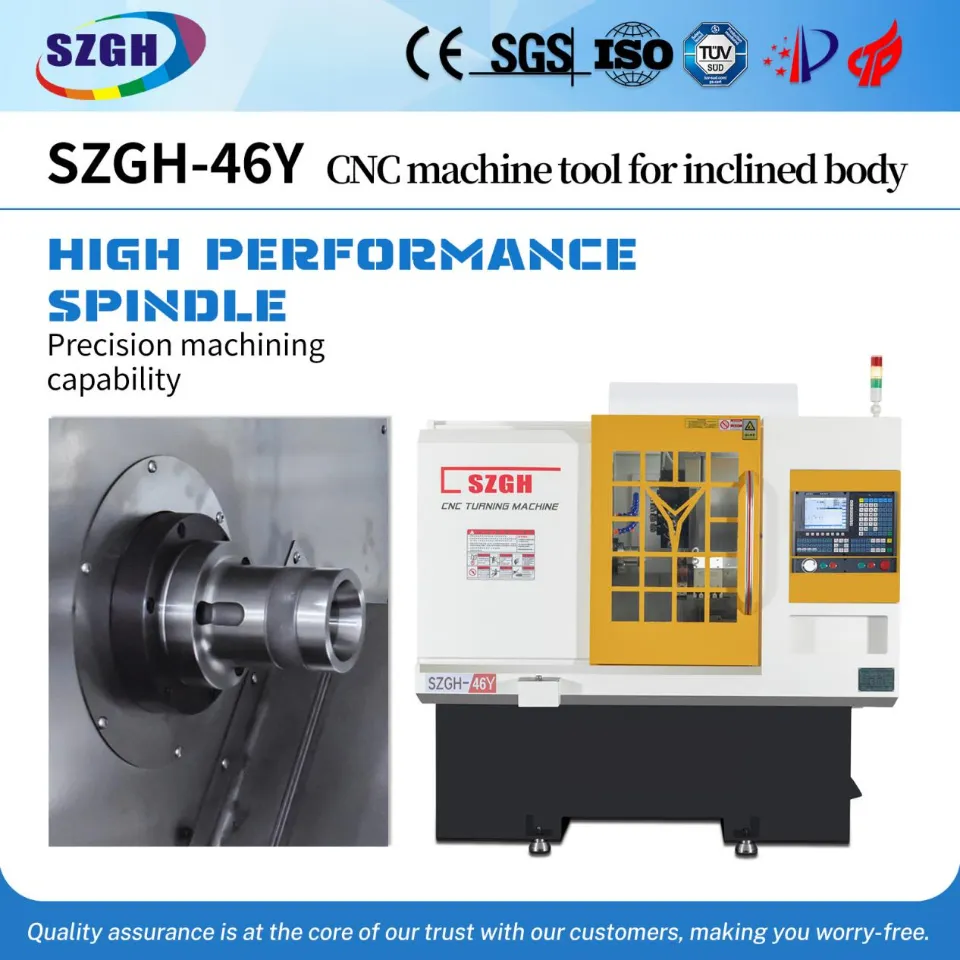
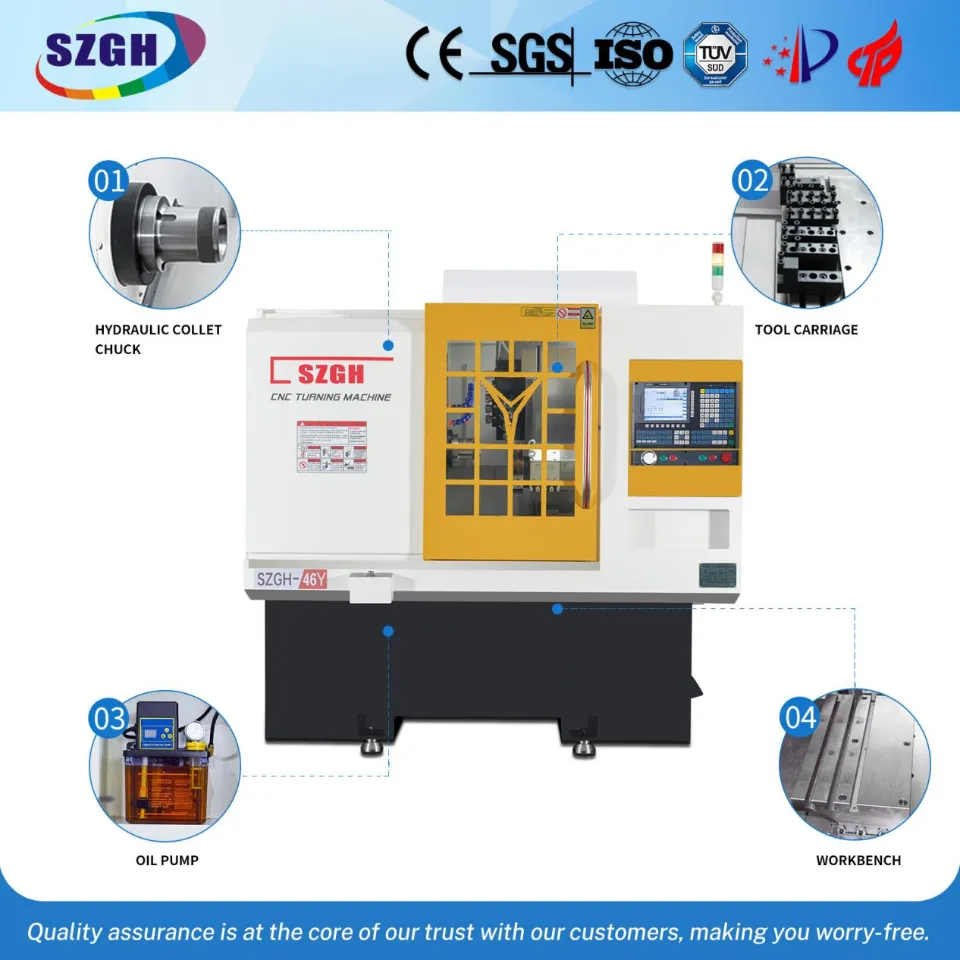
Machines such as the SZGH-46Y Turning-Milling Compound Machine are often introduced at this stage because they offer:
- Practical Y-axis capability for off-center machining
- Integrated milling without overly complex control systems
- Automation readiness for real production environments
The value lies in workflow simplification—not branding or excessive features.
CNC Lathe vs Turning-Milling: A Buyer-Focused Comparison
| Consideration | CNC Lathe | Turning-Milling Compound Machine |
|---|---|---|
| Initial Cost | Lower | Higher, but broader capability |
| Setup Time | Short for simple parts | Shorter overall for complex parts |
| Part Complexity | Limited | Medium to high |
| Production Flexibility | Low | High |
| Automation Potential | Moderate | High |
| Long-Term Scalability | Limited | Strong |
What Many Buyers Realize Too Late
Focusing only on machine price often leads to:
- Increased floor space cost from multiple machines
- Higher quality risk from repeated setups
- Greater operator dependency
A Turning-Milling Compound Machine is not about replacing every CNC Lathe—it is about eliminating unnecessary steps that quietly drain efficiency.
Which One Fits Your Production?
Ask yourself:
- Do my parts require more than pure turning?
- How much time is lost in secondary operations?
- Will part complexity increase in the next 2–3 years?
If the answer is “yes” to any of these, Turning-Milling deserves serious consideration.
Final Thought
The best machine is not the most expensive one, nor the one with the longest specification list.
It is the machine that fits your real production process today—and still makes sense tomorrow.
Understanding your workflow is the first step toward choosing between a CNC Lathe and a Turning-Milling Compound Machine for Production.