CNC Lathe Case Study for Brass and Steel Fittings in Venezuela
Customer Background and Machining Requirements
A customer in Venezuela operating an independent machining workshop needed a CNC machining solution for producing brass and steel fittings. The customer planned to machine bar stock with a maximum diameter of 30 mm and required a machine configuration suited to the parts shown in the supplied drawings.
For a small machining workshop, equipment selection involves more than choosing a machine with sufficient machining capacity. The configuration must match the part geometry, material, required operations, available workshop space, and expected production volume. The machine should also provide a practical way to manage different jobs without unnecessary setup complexity.
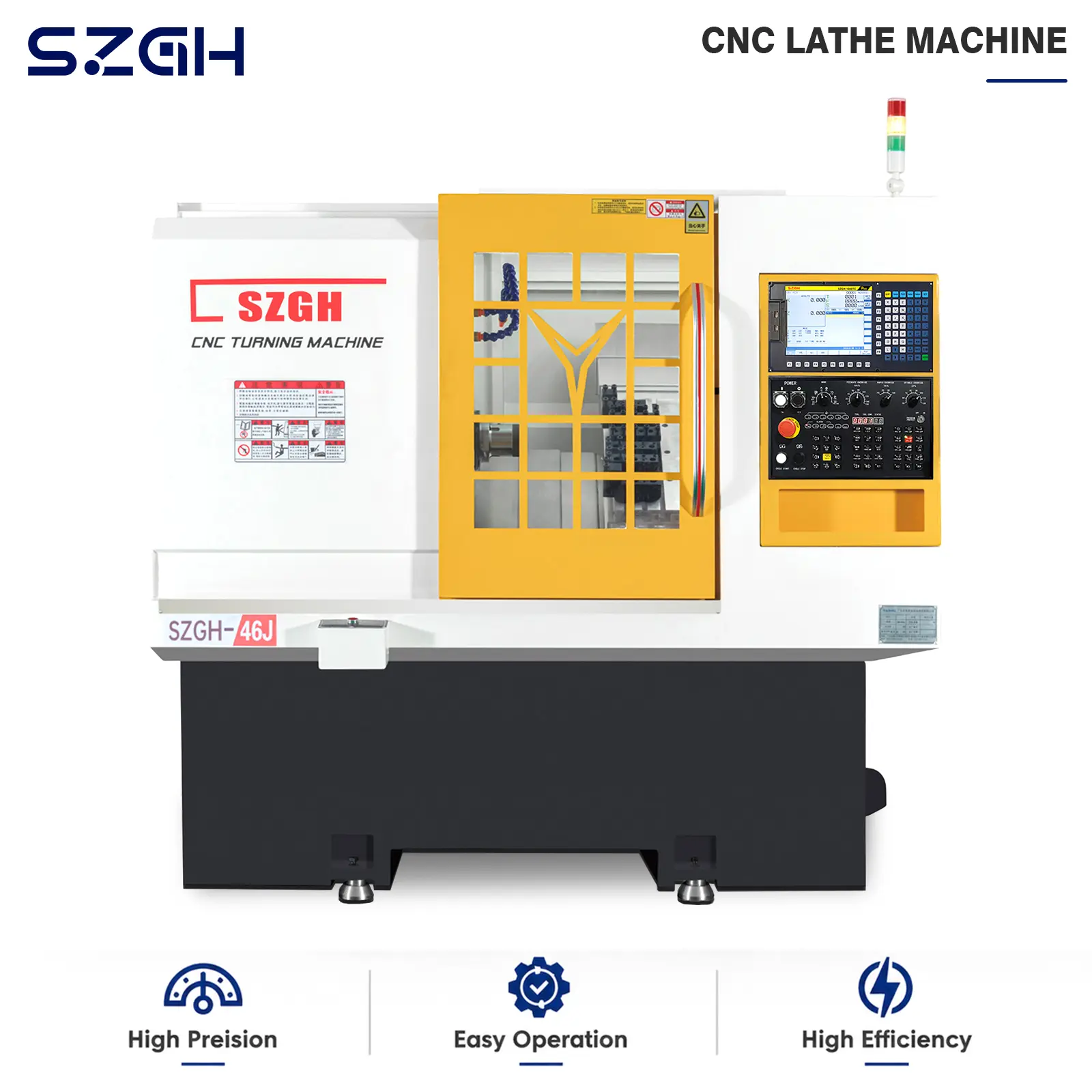
After reviewing the customer's drawings and confirming the configuration requirements, SZGH identified the SZGH-46J CNC lathe with a 5.5 kW spindle, an 8-station turret, two side power heads, and an oil bath bar feeder as the proposed solution.
This case focuses on how the machine configuration addresses the customer's bar machining requirements and the technical factors that should be checked before production begins.
Understanding the Brass and Steel Fitting Application
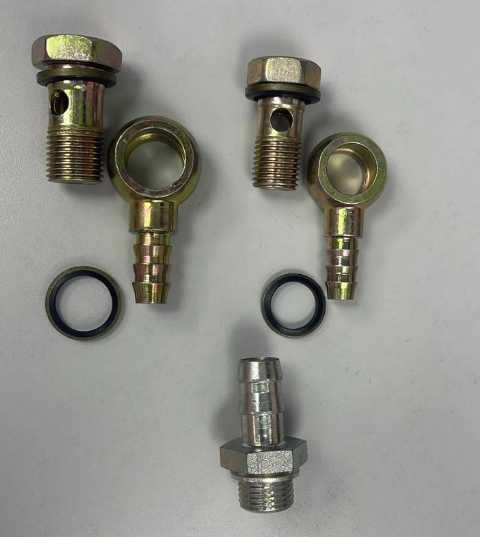
Brass and steel fittings are used in a wide range of mechanical and industrial assemblies. Depending on their design, fittings may require external turning, facing, drilling, threading, grooving, or other machining operations.
Although brass and steel components may have similar shapes, they do not necessarily require identical cutting conditions. Tool selection, cutting speed, feed rate, chip management, and surface finish requirements should be evaluated separately for each material.
For the Venezuelan customer, the main application requirements were:
Workpiece material: Brass and steel.
Maximum bar diameter: 30 mm.
Production environment: An independent machining workshop.
Tooling configuration: An 8-station turret.
Additional machining capability: Two side power heads, subject to the operations specified in the drawings.
Material feeding: An oil bath bar feeder to support the planned bar machining process.
The customer's drawings are central to the final selection. They determine whether each fitting requires turning alone or additional operations that can benefit from the side power heads. They also establish the necessary tool clearances, feature dimensions, tolerances, and machining sequence.
Why the SZGH-46J Was Selected
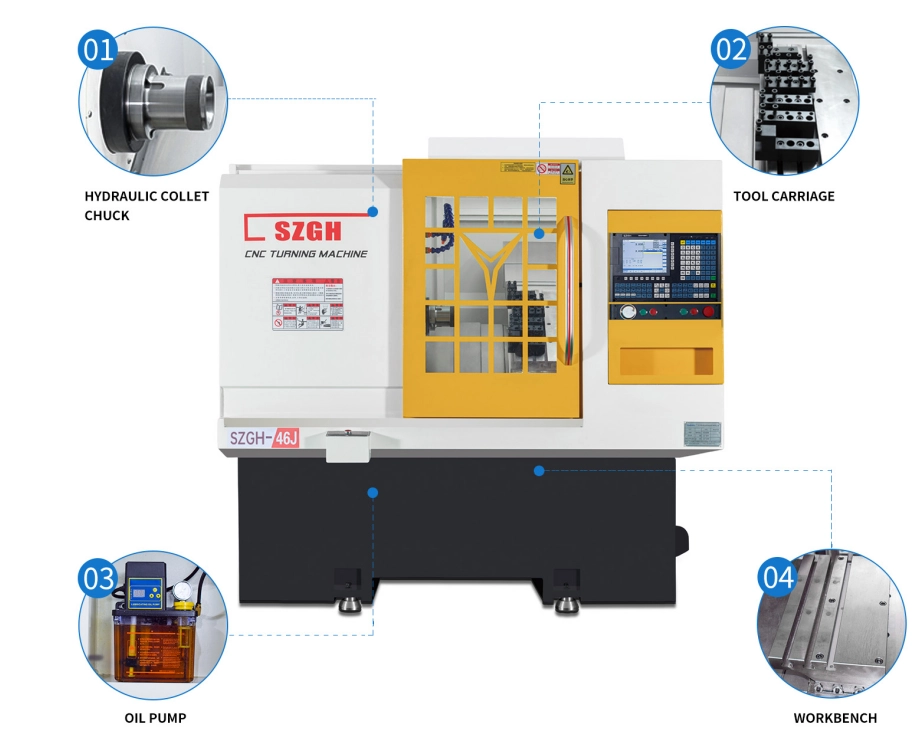
The SZGH-46J is a CNC lathe designed for bar machining and other turning applications. SZGH's published product information specifies a maximum bar diameter of 45 mm and lists a 5.5 kW spindle configuration. These specifications provide a reference for evaluating the machine against the customer's maximum 30 mm bar requirement.
The proposed configuration was selected around the customer's drawings rather than bar diameter alone. Its main elements serve different purposes in the intended machining process.
1. A 5.5 kW Spindle for Turning Operations
The 5.5 kW spindle configuration provides the specified spindle power for the proposed machine. The suitability of this power level depends on the actual cutting conditions, material, tool geometry, and amount of material removed during each operation.
Brass and steel fittings can involve different cutting loads, so the process should be developed using appropriate tooling and cutting parameters for each material. The engineering team should verify that the spindle configuration meets the requirements of the most demanding operation in the customer's drawings.
2. An 8 Station Turret for Tool Organization
The 8-station turret provides positions for arranging the tools needed for the machining process. Depending on the part design, the selected tools may support operations such as turning, facing, grooving, and threading.
Having multiple tool positions can reduce the need to change tools manually between operations. However, the actual benefit depends on how many tools are required, whether the selected tools are compatible with the turret, and whether their positions provide sufficient clearance.
For a small workshop that may handle different fitting designs, the turret configuration can also provide flexibility when preparing different machining programs.
3. Two Side Power Heads for Additional Operations
The proposed configuration includes two side power heads. Their purpose is to support additional machining operations where the customer's part drawings require them.
Depending on the confirmed configuration and tool arrangement, powered tooling may be used for operations such as cross drilling or other side machining. The exact capabilities should be checked against the power-head specifications and the geometry of each fitting.
The key consideration is whether these operations can be integrated effectively with the turning process. If the drawings require only conventional turning, the side power heads may not be essential for every part. If additional side features are required, they may provide a useful option for reducing separate machining steps.
4. An Oil Bath Bar Feeder for Bar Stock Processing
The customer plans to process bar stock with a maximum diameter of 30 mm. An oil bath bar feeder was included in the proposed configuration to support continuous bar feeding during production.
The feeder must be compatible with the actual bar diameter range, bar length, spindle arrangement, and selected machine configuration. The type of bar material and the intended operating conditions should also be considered when confirming the feeder specifications.
For a workshop producing repeated batches, suitable bar feeding equipment can reduce the need for frequent manual loading. Actual productivity improvements depend on bar preparation, part length, cycle time, loading procedures, and the degree of operator involvement.
Proposed Machine Configuration at a Glance
Component | Confirmed requirement | Purpose in the application |
CNC lathe | SZGH-46J | Main turning platform |
Spindle power | 5.5 kW | Supports the planned turning operations |
Turret | 8 stations | Organizes tools for multiple operations |
Side power heads | Two | Supports additional machining where required |
Bar stock | Maximum diameter 30 mm | Defines the customer's stated material size |
Bar feeder | Oil bath type | Supports bar feeding during production |
The table summarizes the proposed configuration based on the information supplied. Final compatibility should be confirmed against the machine quotation, accessory specifications, and customer's drawings.
Important Checks Before Production
A suitable machine configuration should be followed by a clear machining plan. Before production, the customer and engineering team should confirm several technical details.
Part drawings and tolerances: Review all dimensions, thread specifications, surface finish requirements, and critical tolerances. These details determine the tools, machining sequence, and inspection methods.
Material and tooling: Establish separate cutting parameters for brass and steel. Confirm tool materials, insert geometry, workholding, and chip management requirements for each material.
Power-head operations: Identify the exact features to be machined by the two side power heads. Verify tool compatibility, clearance, and the intended machining sequence.
Bar feeder compatibility: Confirm the feeder's supported bar diameter range, bar length, and interface requirements. The selected oil bath feeder must match the machine and the actual production setup.
Workshop requirements: Check the available floor space, electrical supply, installation conditions, operator skills, and maintenance access. These factors are particularly important for an independent workshop planning to integrate a new CNC machine.
A first-piece inspection should be used to verify the machining program and the critical dimensions before proceeding with a production batch. Cycle time and achievable accuracy should be established through process evaluation rather than assumed from the machine model alone.
Conclusion
The Venezuelan customer needed a CNC machining solution for brass and steel fittings made from bar stock with a maximum diameter of 30 mm. After reviewing the supplied drawings, SZGH identified the SZGH-46J with a 5.5 kW spindle, an 8-station turret, two side power heads, and an oil bath bar feeder as the proposed configuration.
This case illustrates why CNC lathe selection should consider the complete part requirements, not only the maximum bar diameter. The turret supports tool organization, the side power heads address additional machining needs where required, and the bar feeder is intended to support the planned bar stock process.
For independent machining workshops, the most appropriate configuration is one that matches the actual drawings, materials, tooling requirements, and production plans. Confirming these details before installation helps establish a practical basis for machining brass and steel fittings.
Learn more about the SZGH-46J CNC lathe or contact SZGH to discuss your part drawings and machine configuration.
Frequently Asked Questions
1.Can the SZGH-46J process 30 mm bar stock?
SZGH's published product information specifies a maximum bar diameter of 45 mm for the SZGH-46J. The customer's 30 mm bar requirement is within that published capacity, but the complete setup should still be confirmed.
2.Can a CNC lathe machine both brass and steel fittings?
Yes. A CNC lathe can process both materials when the tools, cutting parameters, and workholding are appropriate for each material and part design.
3.What is the purpose of an 8-station turret?
An 8-station turret provides multiple tool positions for operations such as turning, facing, grooving, and threading. The actual operations depend on the selected tools and the customer's drawings.
4.Why include a bar feeder in a CNC lathe configuration?
A bar feeder supplies bar stock to the machine and can reduce repeated manual loading during suitable production runs. Its compatibility and expected benefit depend on the bar dimensions, part length, machine setup, and production volume.