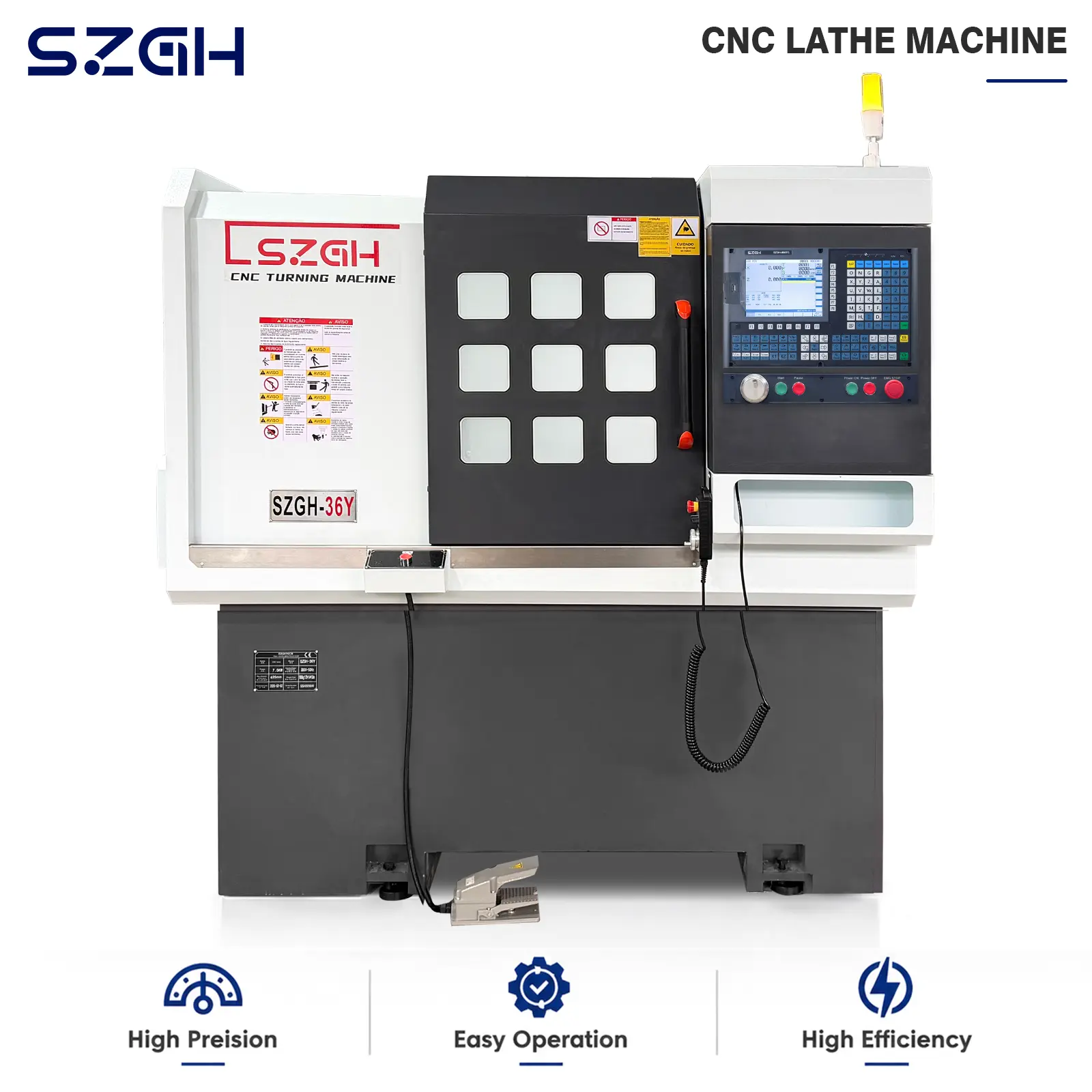
Why Small Metal Parts Manufacturers Are Upgrading to CNC Lathes?
Small metal parts are found in almost every industrial product. They include shafts, bushings, pins, spacers, threaded connectors, sleeves, fittings, and precision fasteners. Although each component may be small, producing it consistently can be demanding. Manufacturers must control dimensions, maintain surface quality, meet delivery dates, and keep unit costs competitive.
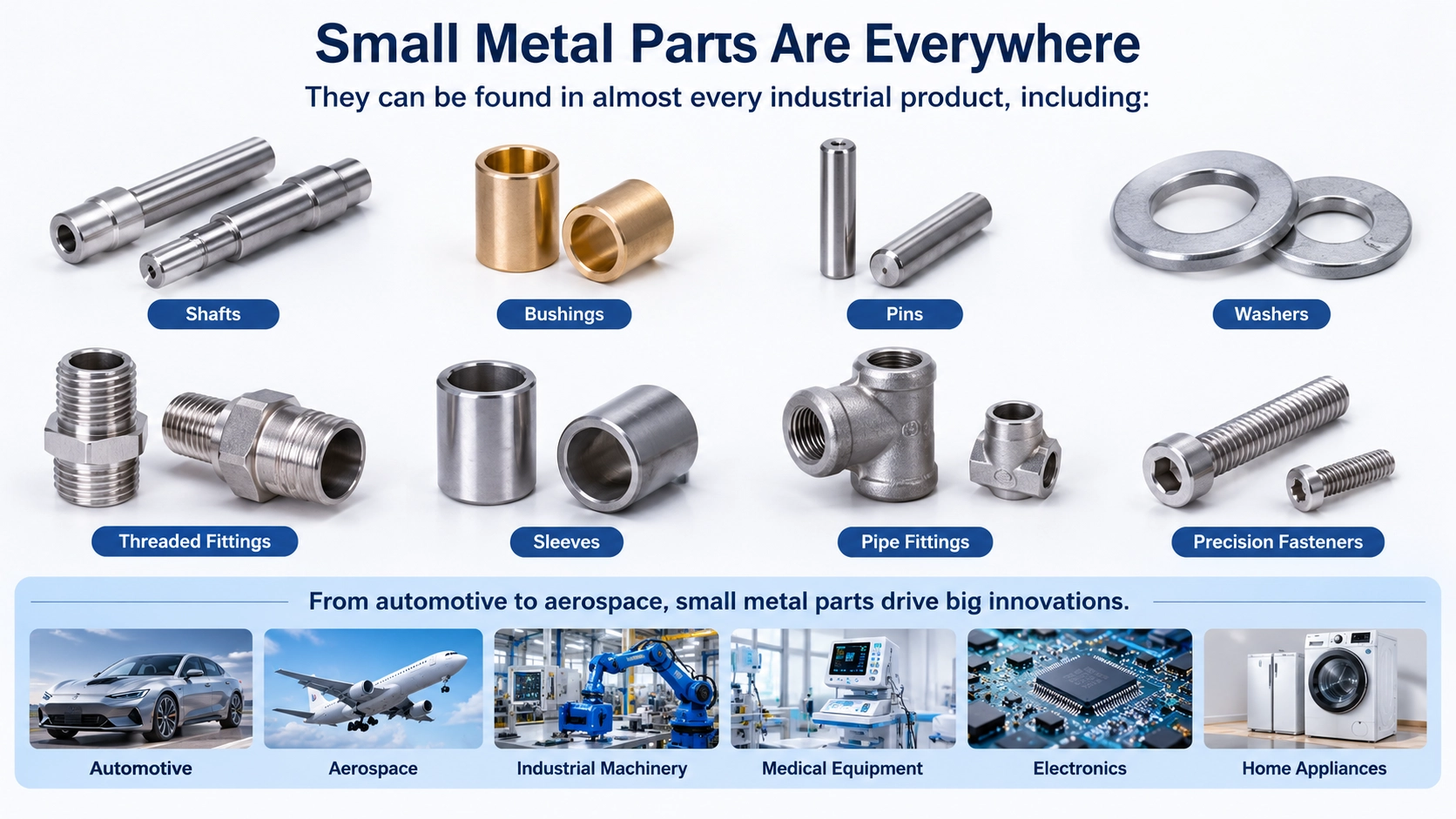
For many workshops, conventional lathes remain useful for repair work, prototypes, and jobs that require frequent manual adjustment. However, as customer expectations rise and orders become more repeatable, manual processes can make it harder to maintain output and quality at the same time. This is one reason more small-parts manufacturers are considering an upgrade to CNC lathes.
The decision is not simply about buying a newer machine. It is about building a more predictable production process.
Consistent Quality Across Every Batch
A small dimensional difference can affect how a pin fits into an assembly or how a threaded connector seals. When parts are produced manually, the result may depend heavily on the operator's experience, concentration, and measurement routine. Even skilled machinists can face variation during long production runs.
A CNC lathe follows a programmed tool path and machining sequence. Once the process has been properly tested and set up, the same program can be used to reproduce the part across a batch. This helps reduce variation caused by repeated manual adjustments.
Consistency is especially important for manufacturers supplying automotive components, hydraulic fittings, electrical connectors, and general machinery. Their customers may expect every delivered batch to meet the same drawing requirements.
CNC equipment does not eliminate inspection. Tool wear, material variation, workholding, and incorrect offsets can still affect dimensions, so first-piece checks and regular measurement remain essential.
Higher Output With Less Repetitive Manual Work
Small turned parts are often produced in quantities where cycle time matters. Loading, positioning, turning, facing, grooving, threading, and checking each part manually can consume significant operator time.
A CNC lathe automates axis movement and executes programmed operations in a repeatable sequence. The operator can focus more on loading, unloading, inspection, tool condition, and process supervision rather than controlling every cutting movement by hand.
The productivity improvement depends on the part geometry, cutting parameters, tool arrangement, machine configuration, and batch size. A simple component may not need an advanced machine. However, for recurring parts with several turning operations, CNC programming can help shorten and standardize the production cycle.
Manufacturers should compare the complete cycle, not just the cutting time. Include loading, clamping, tool changes, measurement, chip removal, and setup when evaluating the expected output.
More Reliable Production Planning and Delivery
Customers increasingly expect suppliers to provide dependable lead times, not just acceptable prices. A workshop that relies on a small number of highly experienced manual operators may struggle when several urgent orders arrive at once or when an operator is unavailable.
With a proven CNC program and documented setup procedure, production becomes easier to repeat and schedule. A workshop can estimate cycle time more consistently, plan batch quantities, and transfer a job between trained operators more easily.
CNC production is not automatically unattended; operators still monitor the process, inspect parts, and respond to alarms. Bar feeders may be worthwhile when production volume and part design justify the investment.
A practical upgrade can begin with one CNC lathe dedicated to frequently repeated parts.
Better Control of Complex Turning Operations
Many small components look simple but require several operations. A shaft may need multiple diameters, shoulders, grooves, chamfers, and threads. A fitting may require accurate external profiles and sealing surfaces.
On a manual lathe, each operation may involve separate operator adjustments and repeated measurements. A CNC lathe can combine these steps into a programmed sequence, subject to its axis configuration, tooling, and workholding capacity.
This can reduce handling between operations and help maintain relationships between machined features. It is particularly useful when the drawing contains several dimensions that must remain concentric or aligned.
Before selecting a machine, manufacturers should review representative part drawings. Check the maximum bar diameter, turning diameter, workpiece length, spindle speed, chuck type, tool stations, and required tolerances. If the part needs milling, drilling, or off-center features, a standard two-axis turning machine may not be sufficient; a live-tool or turn-mill configuration may be more appropriate.
Lower Dependence on Individual Operator Skill
Experienced machinists remain essential for process development and troubleshooting, but relying on one person to remember every setting creates production risk.
CNC programs, setup sheets, tool lists, and inspection records help preserve process knowledge. After a job has been proven, the workshop can use the documented process when the same component is ordered again. New operators still need training, but they do not have to reproduce every cutting movement manually.
This is important for small factories that are hiring new workers, expanding shifts, or preparing to serve customers with stricter quality requirements. The goal is to apply skilled workers' experience to a repeatable, monitored process.
A More Competitive Cost Per Part
A CNC lathe usually requires a higher initial investment than a basic manual lathe. The business case should therefore be evaluated through total production cost rather than purchase price alone.
Consider the following factors:
Cost factor | What to evaluate |
Labor time | Operator time per finished part and per batch |
Cycle time | Total time from loading to completed part |
Scrap and rework | Rejected parts, correction time, and material loss |
Setup | Programming, tooling, clamping, and first-piece approval |
Maintenance | Routine service, consumables, and spare parts |
Capacity | Whether the machine can support future order volume |
A CNC upgrade is more likely to make financial sense when a workshop has repeat orders, tight tolerances, high manual labor content, or costly quality problems. For very low quantities, frequently changing designs, or simple parts that can be produced quickly by an experienced machinist, manual machining may remain the more economical option.
A realistic return-on-investment calculation should use actual production data. Compare the current cost per accepted part with the expected cost after the upgrade, and include financing, training, tooling, maintenance, and downtime.
Choosing a CNC Lathe That Matches Small-Part Production
The right machine is not necessarily the largest or most advanced model. It should match the material, part dimensions, tolerance requirements, batch size, and available workshop space.
For example, the SZGH-36J CNC lathe is designed for small to medium-sized precision turning work and supports bar material up to 35 mm. Its published specifications include a 4 kW spindle motor, X-axis travel of 600 mm, Z-axis travel of 230 mm, and workpiece accuracy of ±0.01 mm. It may be worth evaluating for manufacturers producing pins, bushings, shafts, and other small turned components. Actual suitability should be confirmed through sample machining and the final machine configuration.
For larger bar components, the SZGH-46J CNC lathe supports bar material up to 45 mm. Its published specifications list a 5.5 kW spindle motor and workpiece accuracy of ±0.0075 mm. It can be considered for workshops handling larger fittings, sleeves, and precision mechanical parts.
These figures are reference specifications, not a guarantee for every material or machining condition. The achievable result depends on workpiece material, tooling, clamping, cutting parameters, machine configuration, and inspection method.
Before purchasing, ask the supplier to review your drawings and conduct a sample test where possible. Confirm the machine's actual working capacity, included tooling, controller, chuck, bar-feeding requirements, installation conditions, training, and after-sales support.
When Is the Right Time to Upgrade?
A small-parts manufacturer should consider a CNC lathe upgrade when several of the following situations occur:
Repeat orders are increasing, but manual production cannot keep pace.
Customers are asking for tighter tolerances or more consistent batches.
Rework and inspection are taking too much time.
Skilled operators are becoming difficult to recruit or retain.
Several turning operations require repeated manual setup.
The workshop needs more predictable production planning.
If orders are mostly one-off jobs with changing geometries, the first step may be process analysis rather than immediate equipment replacement. Identify the parts that repeat most often and calculate their current production cost. Those jobs are often the best candidates for CNC conversion.
Conclusion
Small metal parts manufacturers are upgrading to CNC lathes because consistency, productivity, delivery reliability, and cost control have become essential to staying competitive. A properly selected CNC lathe can make repeat production more predictable, reduce repetitive manual work, and help a workshop handle demanding customer requirements.
The best upgrade is based on real part drawings and production data—not on machine size or specifications alone. By matching machine capacity to the parts they manufacture most often, small workshops can invest step by step and build a stronger foundation for future growth.
Looking for a CNC lathe for your small metal parts production?
Explore SZGH CNC machine solutions and discuss your part requirements with our team. We can help you evaluate machine capacity and configuration based on your actual workpieces and production needs.